Does Walking Reduce Swelling After Surgery? What Actually Helps
June 5, 2026
A guide to the pacing question post-op: how walking reduces swelling, how to tell if your dose is right, what helps alongside walking, and when to call your doctor.
If you've had surgery recently and you're noticing swelling at or near the surgical site, you're in good company. Swelling after surgery is one of the most universal post-op experiences, regardless of what kind of procedure you had. It can be unsettling to look at, uncomfortable to live with, and confusing to interpret. Is it a problem? Is it getting better or worse? And the question that brought you to this article: is walking helping it, hurting it, or making no difference?
The short answer is that walking, done at the right pace, generally helps reduce post-surgical swelling. The longer answer is the one worth understanding, because the difference between "walking that helps" and "walking that makes things worse" is real, and learning to tell which is which is one of the most useful skills in a recovery.
Before we go further: this article is about understanding what's happening and how to listen to your body. It's not a replacement for your surgeon's or physical therapist's specific instructions. If they've told you when to start walking and how much, that guidance comes first. The information below is for the question of how to pace yourself once you've been cleared to move.
Why swelling happens after surgery
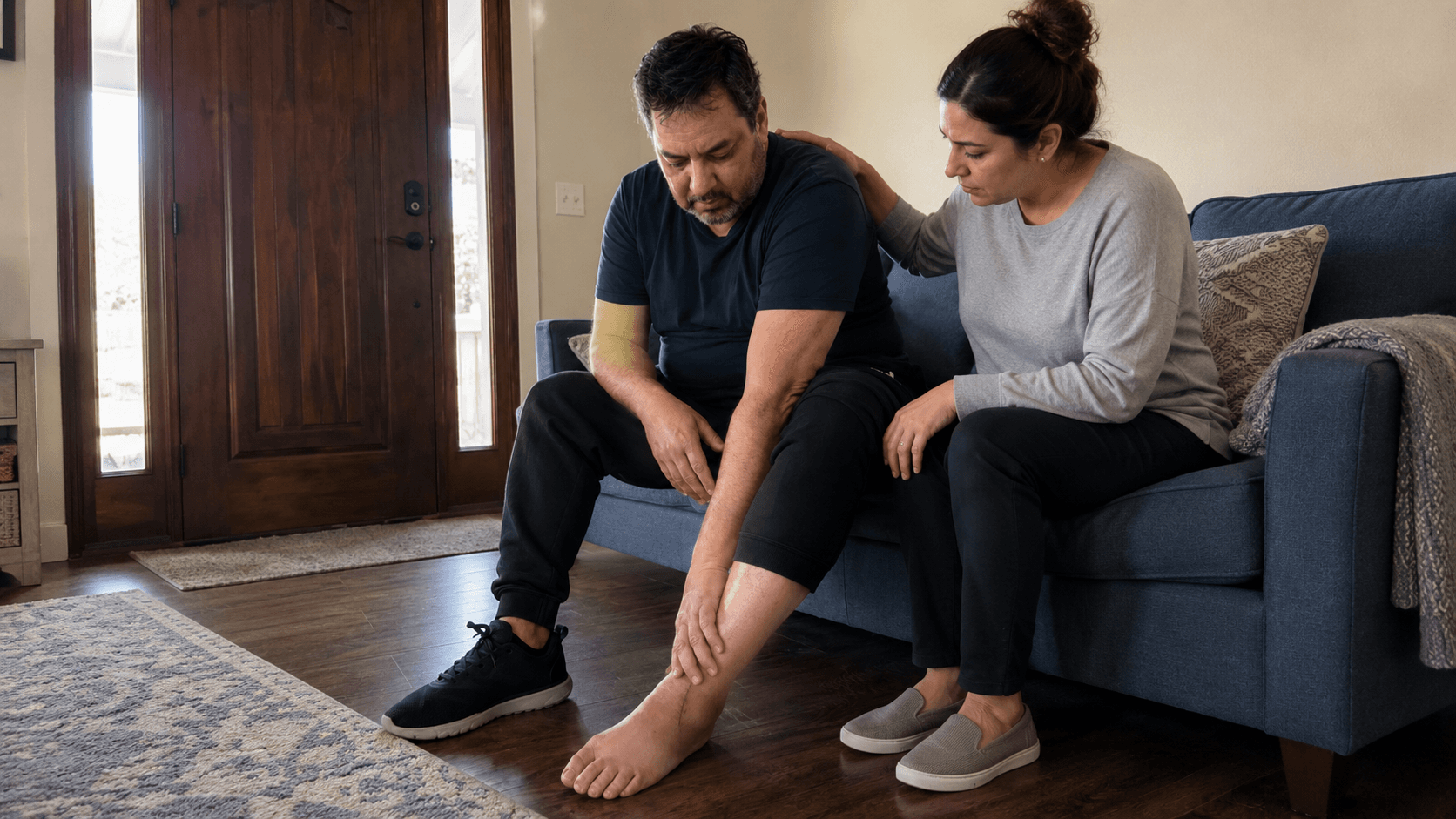
Swelling, or postoperative edema, is one of the most predictable outcomes of any surgical procedure. It happens because your body's healing response involves sending fluid, white blood cells, and proteins to the surgical site to start the repair process. The blood vessels near the incision become more permeable, which lets these healing components reach the tissue, and the increased fluid that comes with them produces the puffiness, tightness, and visible swelling you're noticing.
This is, fundamentally, your body working correctly. The swelling is part of the healing, not a separate problem layered on top of it. Most postoperative swelling peaks somewhere around 48 to 72 hours after surgery and then gradually subsides over the following weeks. The pattern is different for different procedures and different people; knee replacement recovery, for instance, can involve significant swelling that persists for months rather than weeks.
The complication, and the reason walking matters, is that swelling that lingers longer than it should, or that increases instead of decreases, can interfere with healing. Excess fluid in the tissue makes oxygen and nutrients harder to circulate to the cells that are trying to repair themselves. It can also create discomfort that limits movement, which then creates more stiffness, which then makes circulation worse. The body needs movement to clear fluid efficiently, and a sedentary recovery often slows the swelling-reduction process meaningfully.
Yes, walking generally helps. Here's why.
The mechanism by which walking helps reduce post-surgical swelling is actually elegant. The lymphatic system, which is the network responsible for clearing excess fluid from tissue, has no pump of its own. Unlike the circulatory system, which is driven by the heart, the lymphatic system relies entirely on muscle contractions to move fluid through its vessels. When you walk, the muscles in your legs, arms, and core contract rhythmically, and that contraction is what pushes lymphatic fluid through the system and back toward the central circulation.
This is also why elevation helps, why compression garments help, and why being completely still for long periods often makes swelling worse. All of these factors influence whether fluid is moving or sitting in the tissue.
Most surgeons are eager to get patients moving once it's safe, because they understand that movement is one of the most reliable contributors to a good recovery.
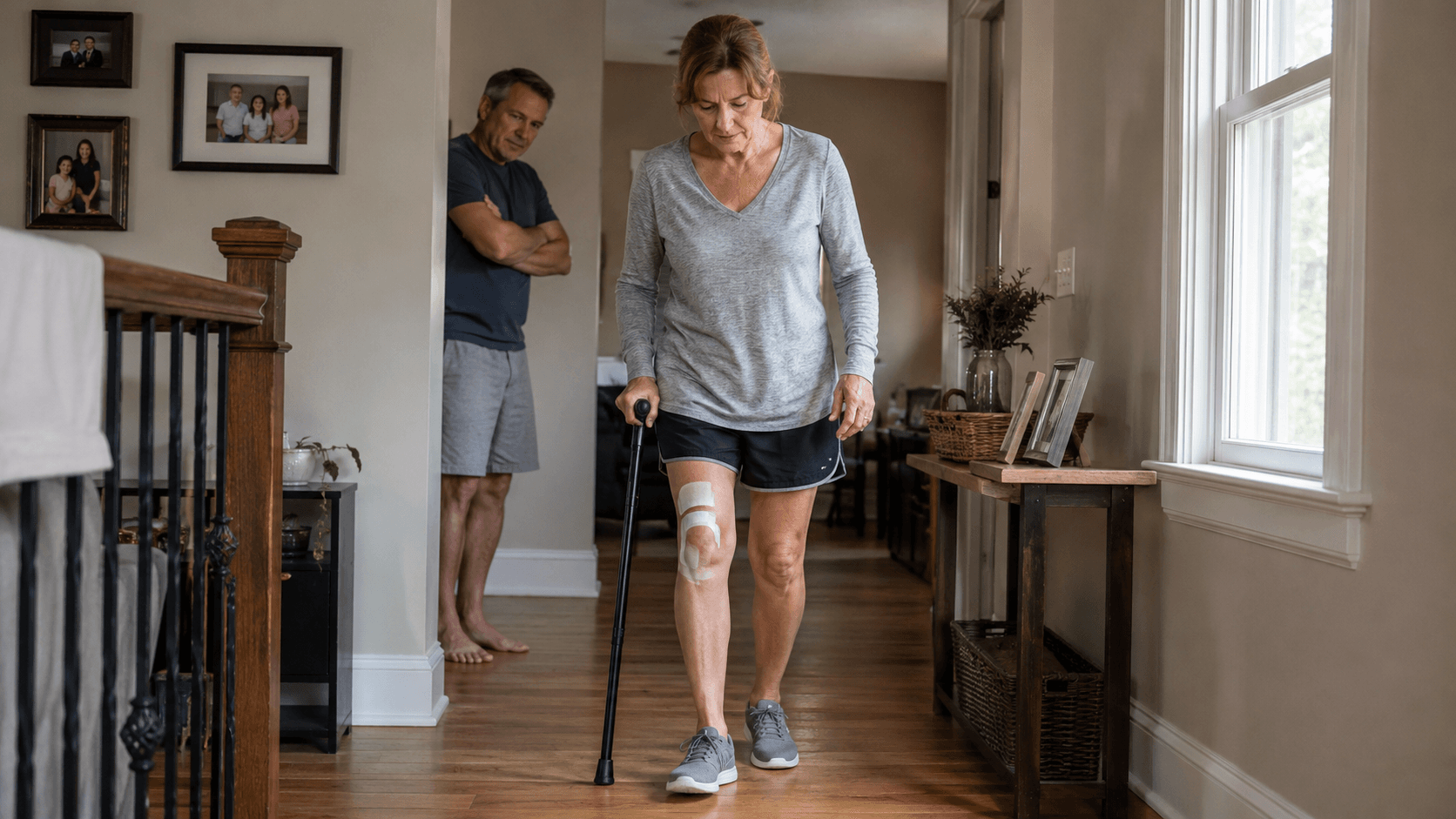
The catch, and it's a real one, is that walking only helps when it's done at a pace your healing tissue can handle. Walking too much, too fast, or too soon can do the opposite of what you want: it can increase swelling by inflaming the tissue further. This is the whole pacing question. Walking is medicine, but like any medicine, the dose matters.
How to tell if your walking is helping
The most reliable signal is how the swelling looks and feels the day after a walk, not during it.
If your swelling is gradually decreasing over days and weeks, and a particular walk doesn't make tomorrow's swelling worse, you're in the right zone. The walks may not produce a dramatic improvement you can see immediately, but they're contributing to the broader downward trend.
A few signs that walking is helping:
The swelling is generally trending downward over the week, even if it fluctuates day to day. This is the most important pattern. Recovery isn't linear; some days are puffier than others. But the overall direction should be toward less swelling, not more.
The surgical site doesn't feel meaningfully worse after a walk than before. Some warmth and mild fatigue at the site is normal. New, sharp pain or significantly increased tightness is not.
Your mobility is improving. As swelling decreases, the joint or area should feel less stiff, more flexible, and easier to move through its normal range. If walking is helping, you should be able to do tomorrow's walk a little more comfortably than today's.
You don't see significant new redness, warmth, or color change at the surgical site. Some pinkness around the incision is normal during healing. Spreading redness or noticeable temperature increase is not.
If most of these are true for you, your walking dose is in a good range. You don't need to push for more; you just need to keep doing what you're doing.
How to tell if you've overdone it
The flip side of the same question. The most useful signal here is also the next-day check.
Increased swelling the morning after a walk. If you walked yesterday and the swelling is visibly worse today than it was the morning before, you walked too far for where you currently are. This is the most reliable single indicator.
Pain that's worse than the day before. Some discomfort during recovery is expected. Pain that's escalating rather than improving over days is a signal that something isn't tolerating the activity level.
New tightness, stiffness, or restricted range of motion. If the joint or area feels more locked-up the morning after a walk than it did before, the walk produced inflammation that's interfering with mobility.
Fatigue that lasts into the next day. Some tiredness after walking in recovery is normal. Significant fatigue still present 24 hours later means you used reserves your body didn't have to spare.
Sleep disrupted by discomfort. If the affected area was throbbing or sore enough to interrupt sleep, that's a clear overshoot.
If you're seeing any of these consistently, your current pace is too much. The fix isn't to push through; it's to back off. Walk less tomorrow, give the tissue a chance to recover, and resume at a smaller dose once the over-response settles.
Pacing your walks during a swelling recovery
The principles are straightforward but worth saying out loud, because the intuition many people bring to recovery is the wrong intuition.
Start smaller than you think you need to. Almost everyone overestimates their post-surgical tolerance. If your first cleared walk is 300 steps and it feels easy, that's fine; 300 steps was the right starting amount. Don't punish yourself for not doing more.
Increase one variable at a time. Distance, duration, pace, terrain. If yesterday's walk was 300 steps on flat ground and felt fine, tomorrow's walk can be 330 steps on flat ground, or 300 steps on a mild incline, but probably not both. When you change two things and have a problem, you don't know which one caused it.
Build in rest days. Walking every single day in the early weeks of recovery often means tissue doesn't get enough recovery time between sessions. Alternating walking days with quieter days lets the healing keep up with the activity.
Use the morning-after rule as your guide. Don't decide how much to walk today based on how you feel right now. Decide based on how yesterday's walk made this morning start. That's the actual measurement of whether your pace is right.
When in doubt, do less. The asymmetry matters: a day of doing too little costs you nothing. A day of doing too much can cost you a week. Bias toward the smaller walk.
WalkReady is built around exactly this. The app's out-and-back format means you go out at the pace that feels right, get a gentle audio cue at the halfway point, and turn back. The walk naturally self-limits to what you can handle. Each walk you complete sets the suggestion for the next one, so the gradual building happens at your actual pace without you having to calculate or compare.
Other things that help swelling alongside walking
Walking is one part of the swelling-reduction toolkit. The others, used together, work better than any single thing alone.
Elevation. When you're sitting or lying down, keeping the affected area elevated above the level of your heart helps gravity drain fluid back toward the central circulation. For leg surgery, this means propping the leg up on pillows. For arm surgery, raising the arm on a pillow or supporting it overhead. Aim for elevation during rest periods, not just briefly; thirty minutes at a time, several times a day, makes a real difference.
Compression. Compression sleeves, stockings, or wraps gently push excess fluid out of the swollen area and prevent it from pooling. Your surgical team likely prescribed something specific; use it as directed. Don't try to compress without their guidance; too much pressure or the wrong placement can cause its own problems.
Cold therapy. Ice or cold compresses, used early in recovery, help control inflammation and reduce swelling. The timing matters; cold is most useful in the first days after surgery and during acute flare-ups. Your surgical team's instructions about ice are worth following closely.
Hydration. Drinking adequate water actually helps the body process and clear excess fluid more efficiently. Counterintuitive, but real.
Avoiding salt. High sodium intake makes the body retain water, which can worsen swelling. Limiting processed foods and added salt during recovery is one of the small things that helps more than you'd expect.
Sleep. The body does most of its healing work at night. Adequate, quality sleep during recovery is not optional; it's a core part of how swelling resolves.
None of these replace each other. The recovery that works best uses several together, paced thoughtfully across each day.
When to call your doctor
Not all post-surgical swelling is normal recovery swelling. Some patterns indicate complications that need clinical attention. A few specific situations warrant contacting your surgical team rather than continuing to manage at home.
Swelling that's increasing rather than decreasing over time. After the initial 48 to 72 hour peak, swelling should be trending downward. Continued increase past that point warrants a check-in.
Sudden, severe swelling that develops quickly. A noticeable change over hours rather than days is different in character from normal recovery swelling.
Pain that's escalating, especially if it's sharp or focal. Recovery pain generally improves; pain that's getting worse, particularly in a specific spot, can signal something other than normal healing.
Redness that's spreading, warmth at the surgical site, or fluid drainage from the incision. These can be signs of infection and need prompt evaluation.
Fever. Any fever during recovery warrants a call to your surgical team.
Calf pain, leg swelling, or shortness of breath. These can be signs of a blood clot, which is a known post-surgical risk. Don't wait on these; call your doctor or seek immediate care.
A soft, fluid-filled bump that develops near the incision. This can be a seroma, a collection of fluid that sometimes forms after surgery. Often these resolve on their own, but your surgical team should evaluate any new lump.
When in doubt, call. Surgical teams would much rather hear from a worried patient who turned out to be fine than catch a problem two weeks late.
A different way to think about it
The single most useful mental shift in a swelling recovery is moving from "I need to walk to get better" to "I need to walk at the dose my healing tissue can support today." The first framing produces overdoing it; the second produces actual healing.
The body is doing the work of recovery whether you push it or not. Your job isn't to drive that process harder. Your job is to give it the right conditions: gentle movement, adequate rest, elevation, compression where prescribed, good sleep, good hydration. The recovery happens at its own pace, and the people who recover well are generally the ones who learn to support that pace rather than fight it.
That's also what WalkReady is built to support. The app uses a simple out-and-back format: you head out at whatever pace feels right today, you get a gentle audio cue at your halfway point, and you turn back. The walk you just finished sets the suggestion for the next one, building gradually at the pace your body actually has. No comparison to where you "should" be by now. No program to fall behind on. Just the next walk, sized to what you can handle.
Swelling is one thread in the broader work of getting back on your feet after surgery. If you want to read more about the pacing question more broadly, our piece on walking too much after surgery covers the overdoing-it side of this same question in more depth. If your recovery involves open heart surgery specifically, walking after open heart surgery covers the cardiac-specific pacing and warning signs.
Final thoughts
The swelling will pass. It will go up some days and down others. It will respond to your walking, your elevation, your compression, your sleep, and the dozens of small decisions you make each day during recovery. None of those individual choices will dramatically change the trajectory by themselves, but the cumulative effect over weeks is real, and it's the difference between a recovery that goes well and one that drags out longer than it should.
Walking, paced thoughtfully, is one of the strongest tools you have. Use it gently. Watch the next morning more than the moment. Back off when you need to. And trust that your body is doing the work, even on the days when the swelling feels like it's not changing at all. Recovery is slower than you want it to be. The version of you who's healed is still ahead. You'll get there.