Walking After Surgery: How to Pace Your Recovery and Get Back on Your Feet
June 15, 2026
Walking after surgery is one of the most important things you can do for your recovery. Here is how to pace yourself, avoid overdoing it, and build back up safely after your care team clears you to move.
Your care team has cleared you to walk. Now comes the part nobody fully prepares you for: figuring out how much is right.
Walking after surgery is one of the most consistently recommended parts of recovery across almost every surgery type. The evidence behind it is strong. But the guidance you get is often general, and the reality of doing it, on a particular day, with a particular amount of energy and a particular level of discomfort, is more complicated than it sounds in a discharge pamphlet.
Most people make one of two mistakes. They do too much too soon, pushed by the desire to feel normal again or by the fear that staying still means falling behind. Or they do too little, held back by pain, uncertainty, or the worry that moving will cause damage. Both are understandable. Neither is what your recovery needs.
This article covers what walking after surgery actually looks like in practice: why it matters, how to pace it, what it looks like for different surgery types, and how to recognize when you are overdoing it before it sets you back. Everything here applies after your care team has cleared you to walk. The question of when to start and how much is medically appropriate is one only your surgical team can answer for your specific situation.
Why walking matters after surgery
The case for walking after surgery is not complicated. Movement does things that rest cannot.
When you walk after surgery, even short distances at a slow pace, you keep blood moving through the body in a way that lying still does not. That circulation matters for healing. It reduces the risk of deep vein thrombosis, a blood clot that can form in the legs during extended periods of inactivity and that carries serious risks if it travels. It helps manage swelling by encouraging fluid to move rather than pool. It keeps the lungs working more fully, reducing the risk of pneumonia. It helps the digestive and urinary systems return to normal function after the disruption of anesthesia and surgery.
Beyond the physical mechanics, walking after surgery preserves the muscle strength and joint mobility you will need to return to normal activity. Every day of complete inactivity costs something in muscle and function that takes longer to rebuild than it took to lose. Walking, even gently, maintains a baseline that makes the rest of your recovery faster.
There is also a less-discussed benefit: it helps your nervous system and your mood. Hospitalization and recovery are disorienting. The simple act of moving through space, even a hospital corridor or a short loop around the block, returns some sense of agency and normalcy that rest alone cannot provide.
None of this means more is always better. The benefits of walking after surgery come from the right amount of movement for where you are in your recovery, not from pushing as far as possible as fast as possible.
The pacing problem
The most common mistake people make when walking after surgery is misjudging how much is right. And it usually goes in one direction: too much, too soon.
The body is not straightforward about this in the moment. Post-surgical adrenaline and the relief of finally being mobile can make a first walk feel easier than it is. Pain medication can mask the signals that would otherwise tell you to slow down. And the desire to feel like yourself again is a real and powerful motivator that is not always in sync with what your body can actually handle.
The signs that you have done too much tend not to arrive while you are walking. They arrive afterward. Swelling that increases rather than decreases after a walk. Pain that spikes in the hours following rather than settling. Fatigue that worsens over the course of a day rather than improving with rest. These are the signals that the load was more than your recovery could absorb at that moment.
The article on walking too much after surgery goes into detail on how to recognize these signals and how to adjust. The core principle is consistent across surgery types: the right amount of walking is the amount that leaves you feeling roughly the same or slightly better after rest, not the amount that leaves you feeling set back. If you finish a walk and feel worse after an hour of rest than you did before you started, that walk was probably too long or too fast.
Pacing is not the same as doing less. It is doing the right amount, and increasing it gradually as your recovery earns the right to more. A consistent, graduated approach to walking after surgery tends to produce better outcomes than an inconsistent one where good days invite overdoing it and bad days invite stopping altogether.
What walking looks like by surgery type
Recovery looks different depending on what was done. The surgery type, how invasive the procedure was, what structures were affected, and your overall health going in all shape what walking looks like in the days and weeks that follow. Your care team's guidance for your specific situation is always the right starting point.
The articles below go deeper on what walking looks like after specific surgeries. If your surgery type is covered, start there.
Knee replacement
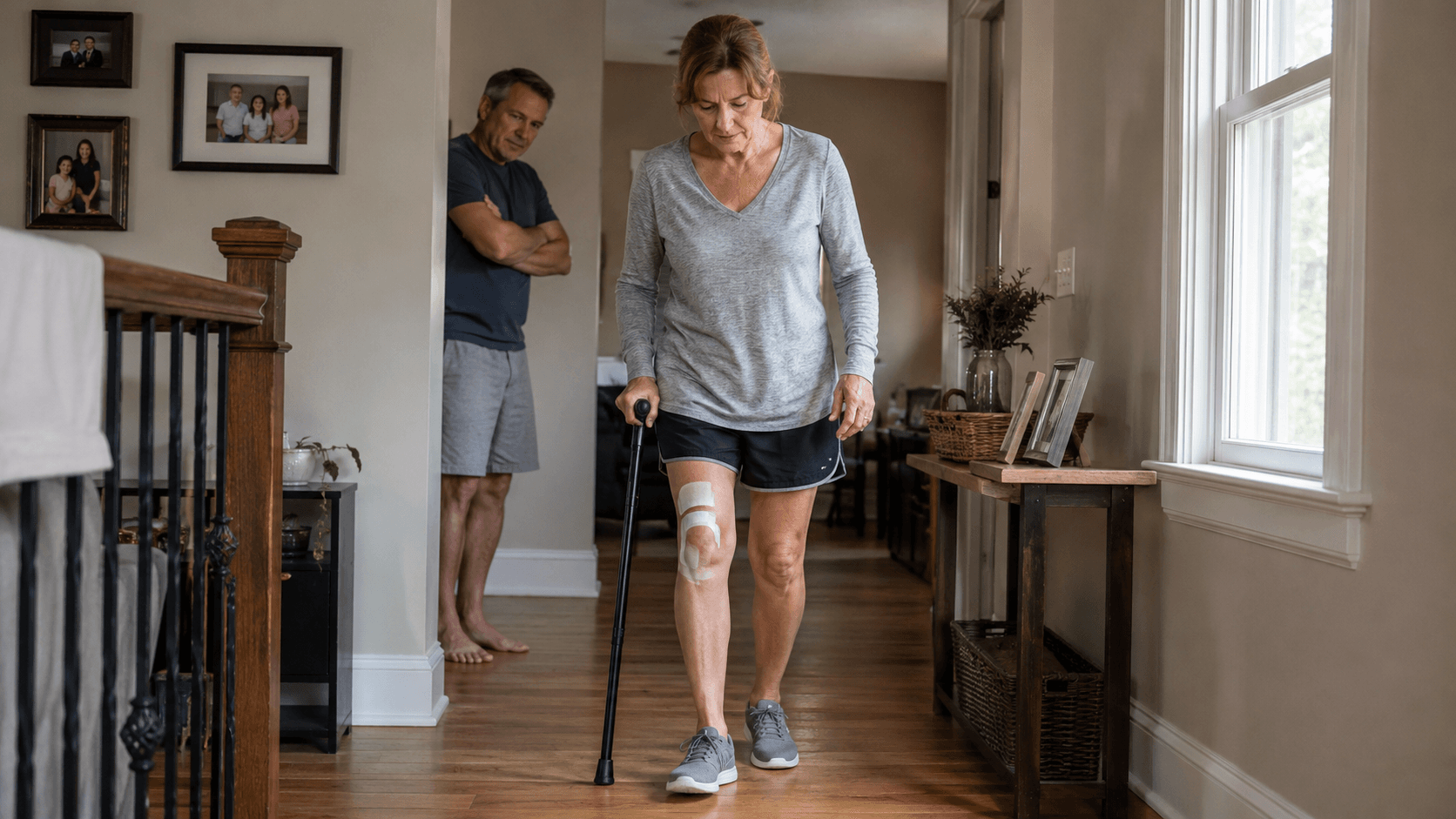
Walking is central to knee replacement recovery from the beginning. Most people are on their feet within a day of surgery, with a walker or other support, and the gradual progression from short supported walks to longer independent ones is a core part of the rehabilitation process. The pace of that progression depends on how the knee responds.
The walking after knee replacement article covers the full arc of recovery, what to expect at each stage, how to recognize signs that you are overdoing it, and how to build back up.
Open heart surgery
Cardiac surgery recovery involves some of the most careful and gradual return-to-walking protocols, for good reason. The heart and chest have been through significant stress, and the return to activity happens in small, measured increments over weeks and months. Walking is still the primary recovery activity, but the starting point is very modest and the increases are slow and deliberate.
The walking after open heart surgery article covers what the recovery arc looks like for cardiac surgery specifically, including the pacing principles and the signs that you need to slow down.
Managing swelling during recovery
Swelling after surgery is one of the most common concerns during recovery, and walking plays a direct role in managing it. Movement encourages the lymphatic system to clear fluid that would otherwise accumulate, which is why gentle walking often reduces swelling rather than worsening it, when done at the right pace and duration.
The does walking reduce swelling after surgery article covers how this works, when walking helps and when it can make swelling worse, and what to watch for.
ACL surgery
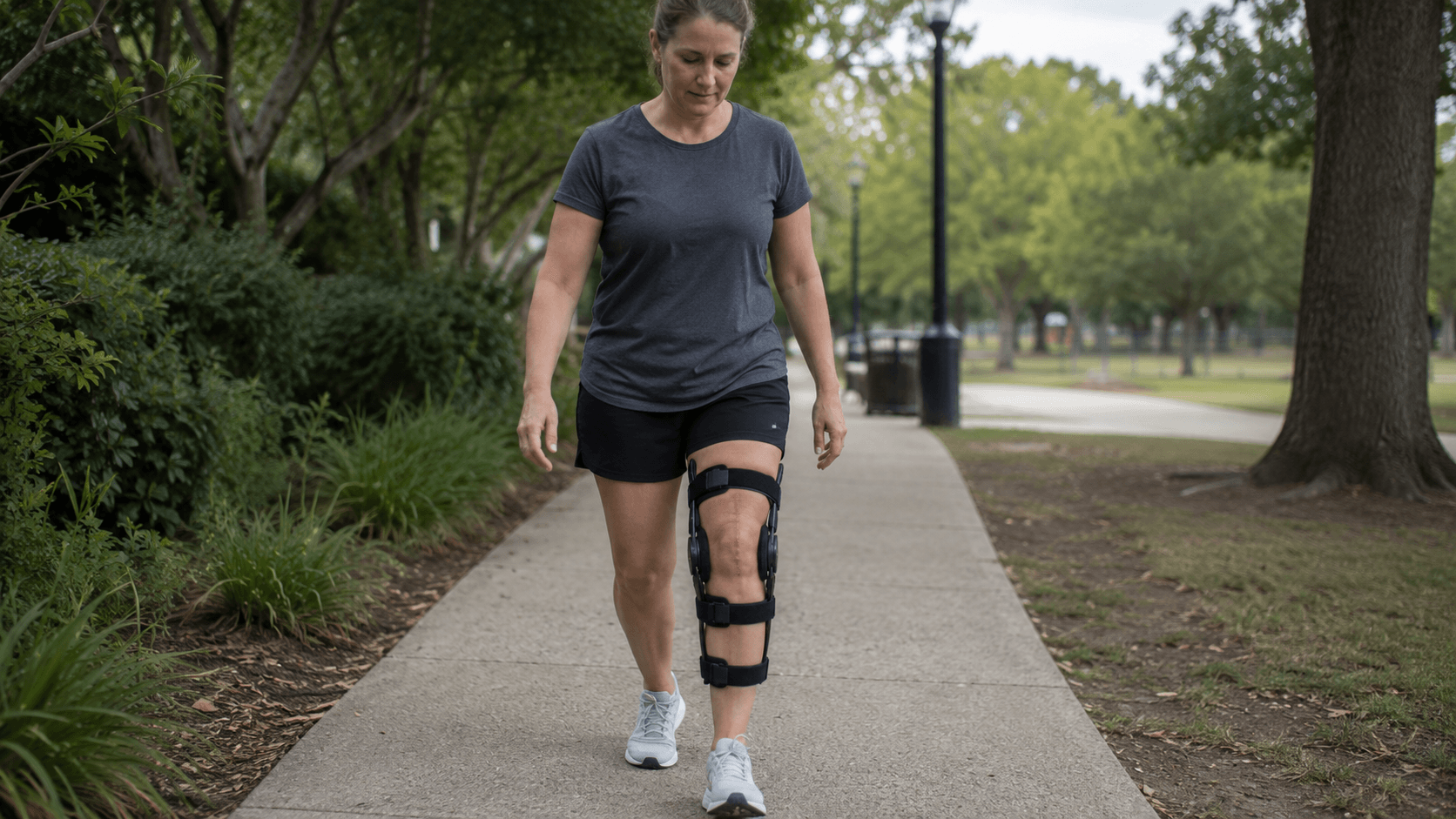
Recovery from ACL surgery is paced around a healing graft that takes months to mature, so the knee can feel ready to do more well before the tissue is. Walking is an important part of the recovery once you are cleared, but the amount that helps and the amount that sets you back are closer together than they feel.
The walking after ACL surgery article covers how to rebuild your walking at the right pace once your care team has cleared you, how to read the knee's day-after signals, and when to check in with your surgeon or physical therapist.
Other surgery types
The cluster of articles on this site will continue to grow. If your surgery type is not listed above, the general pacing principles in this article apply while you work with your care team on the specifics. The sections below on pacing and signs of overdoing it are intended to be useful regardless of surgery type.
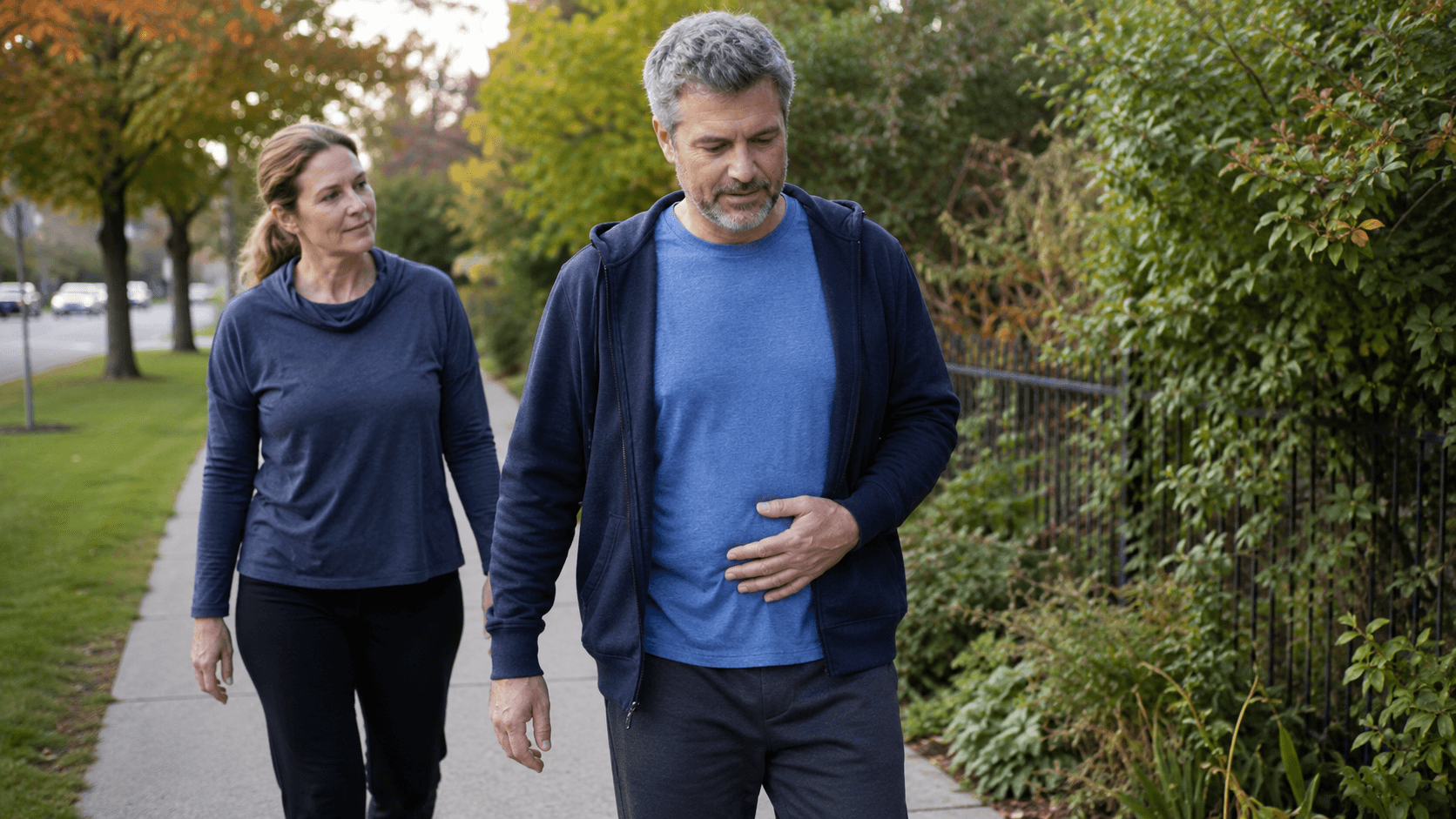
Hernia recovery has a pacing balance of its own, because the same gentle walking that helps can tip into strain on the repair if you push too hard. The walking after hernia surgery article covers how to rebuild your walking gently and stay on the helpful side of that line, within the limits your surgeon sets.
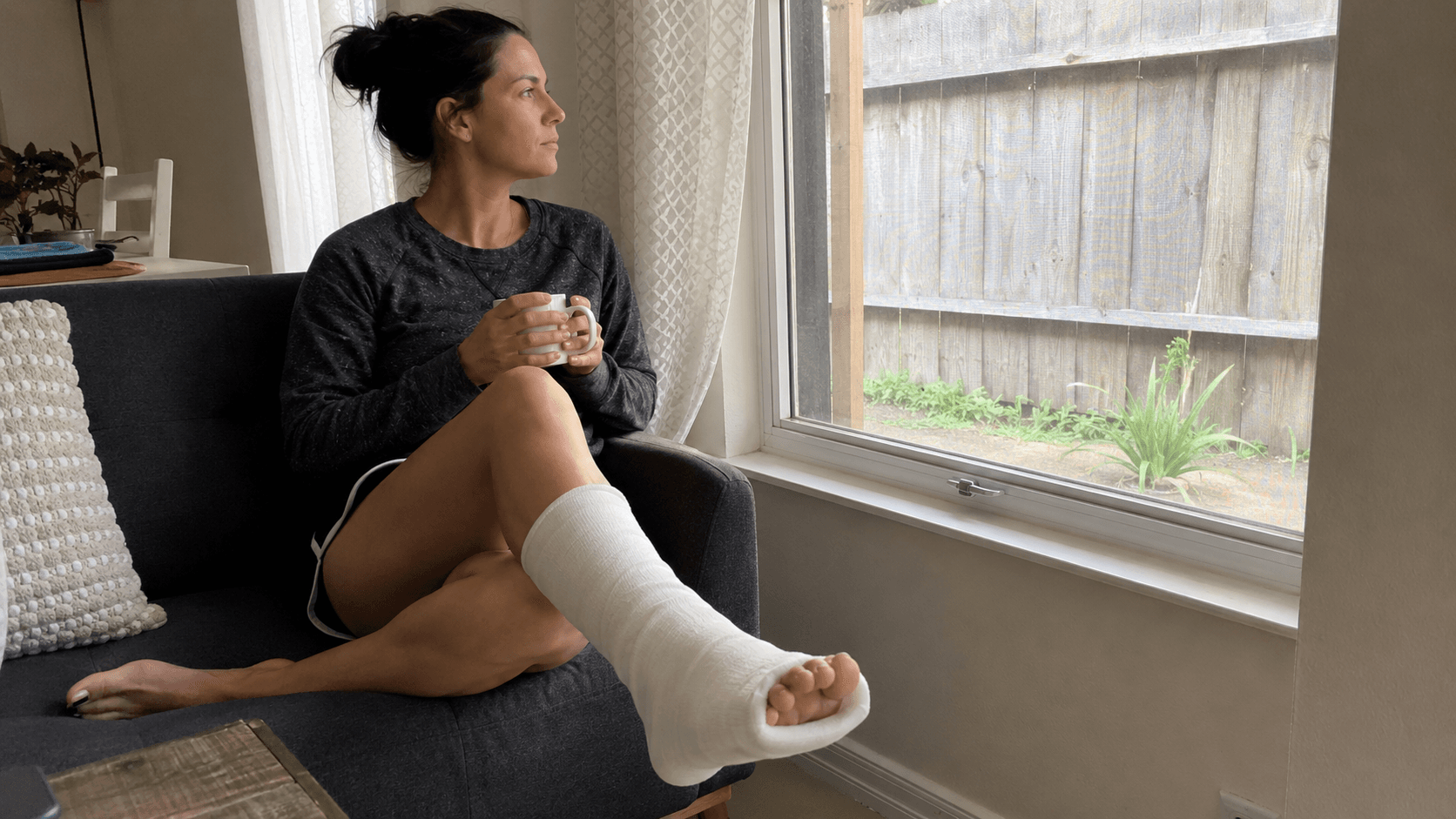
A broken ankle is an injury rather than a surgery, but the rebuild follows the same pattern, especially after weeks in a cast or boot leave the joint weak and the nervous system cautious about bearing weight. The walking after a broken ankle article covers how to rebuild your walking, and your confidence in the ankle, gradually once your doctor has cleared you.
Future articles in this cluster will cover walking after hip replacement, foot and ankle surgery, and spinal surgery. The blog index lists everything published so far, so it is worth a look if your surgery type is not covered above yet.
General pacing principles
Regardless of surgery type, the principles that make walking after surgery productive rather than counterproductive are consistent.
Start shorter than you think you need to
The instinct after being cleared to walk is to do as much as you can. The more useful instinct is to do less than you think you can on the first few days, see how you respond, and increase from there. A short walk that you recover from well is more useful to your recovery than a longer walk that sets you back and forces you to rest for two days. The cumulative effect of consistent short walks that you actually recover from is greater than the effect of ambitious walks followed by forced rest.
Rest is part of the work
Walking after surgery is not a test of endurance. The recovery happens in the rest period after the walk, when the body processes the movement and builds on it. Shortchanging rest to fit in more walking is not more recovery. It is less, because the adaptation that makes walking beneficial requires the recovery period that follows.
Increase gradually
A useful rule of thumb is not to increase your walking duration or distance by more than ten percent from one session to the next. This is not a medical guideline but a general principle for gradual progressive loading that reduces the risk of doing too much before your body is ready. Your care team may have specific guidance that differs, and their guidance takes priority.
The more important principle is to let your body's response, not your ambition, determine when you increase. If a walk at a given duration and pace is leaving you feeling roughly the same or slightly better the next day, that is a signal your body may be ready for a little more. If it is leaving you feeling worse, that is a signal to hold where you are or reduce.
Track what you are doing
One of the most useful things you can do during recovery is keep a simple record of your walks: how long, how far, how you felt during and after. This record does three things. It shows you progress that is real but easy to miss when you are in the middle of it. It helps you identify patterns, like noticing that afternoon walks leave you feeling worse than morning ones, or that a particular duration consistently produces good recovery while a slightly longer one consistently does not. And it gives your care team useful information at follow-up appointments.
WalkReady is built for exactly this stage of recovery. It tracks your sessions, logs how you felt, and shows you the progression over time so you can see whether you are on a trajectory that is moving in the right direction. It is not a fitness app. It is a session-based walking tool designed for people who are building back up rather than training for performance.
Signs you are overdoing it
Across surgery types, the warning signs that a walking session was more than your recovery could handle at that point tend to look similar.
Swelling that increases after a walk and does not decrease with rest is one of the clearest signals. Some swelling during recovery is normal and expected. Swelling that consistently gets worse after walking rather than better, or that does not respond to elevation and rest, is worth paying attention to and worth raising with your care team.
Pain that increases in the hours after a walk rather than settling is another signal. Some discomfort during and immediately after walking is expected, especially early in recovery. Pain that spikes well after the walk and does not resolve with rest is a different pattern and worth noting.
Fatigue that worsens across the day rather than improving with rest after a walk suggests the session may have been more than your system could absorb. This is especially relevant in the early weeks of recovery when the body is already working hard on healing and has less reserve capacity for activity.
If you experience chest pain, severe shortness of breath, dizziness, or any symptom that feels like a medical concern, stop walking and contact your care team or seek medical attention. These are not pacing signals. They are signals to stop and get help.
How WalkReady supports your recovery walks
WalkReady was built for this exact stage of recovery. Not for fitness goals or step counts or performance tracking, but for the specific situation of someone who has been cleared to walk and is trying to figure out the right amount, at the right pace, on a particular day in their recovery.
The app runs sessions rather than tracking continuous movement throughout the day. You start a session when you walk, end it when you are done, and log how it felt. Over time, those sessions build a picture of your recovery that is useful both to you and to your care team.
It is free to use. No account required to get started.